
Frequently Asked Questions
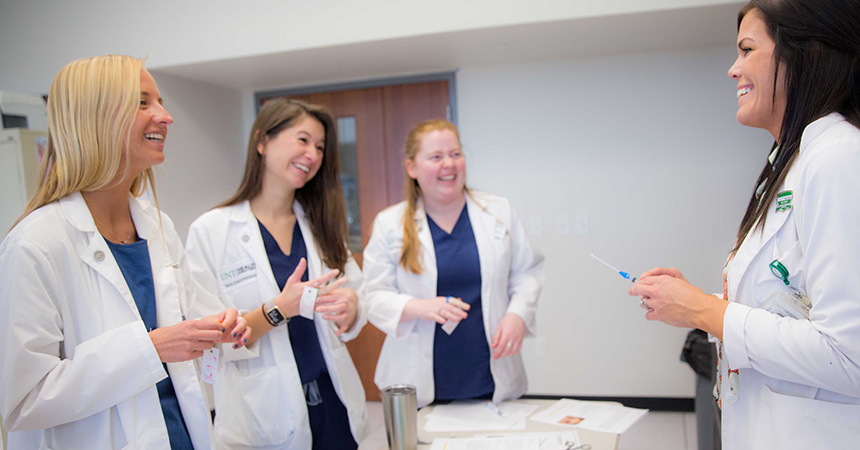
The Office of Admissions and Recruitment welcomes questions via email or phone. For convenience, responses to commonly asked applicant questions are provided below.
What is the MPAS program?
The Master of Physician Assistant Studies (MPAS) program at UNT Health Fort Worth
is a full-time, 30-month program designed to prepare students for a career as a physician
assistant.
Is the MPAS program accredited?
Yes. The Accreditation Review Commission on Education for the Physician Assistant,
Inc. (ARC-PA) has granted Accreditation-Continued status to UNT Health Fort Worth
Physician Assistant Program sponsored by UNT Health Fort Worth. Accreditation-Continued
is an accreditation status granted when a currently accredited program is in compliance
with the ARC-PA Standards.
Accreditation remains in effect until the program closes or withdraws from the accreditation process or until accreditation is withdrawn for failure to comply with the Standards. The approximate date for the next validation review of the program by ARC-PA will be September 2034. The review date is contingent upon continued compliance with the Accreditation Standards and ARC-PA policy. The program’s accreditation history can be viewed on the ARC-PA website at https://www.arc-pa.org/wp-content/uploads/2026/03/Accreditation-History-Univ-of-North-Texas-HSC-102.pdf
What is the length of the program?
The MPAS program is a full-time, 30-month program.
What degree is awarded?
Upon successful completion of the program, graduates receive a Master of Physician
Assistant Studies (MPAS) degree.
How many candidates are accepted into the MPAS program each year?
The MPAS program accepts 75 candidates into each cohort annually.
What is a cohort?
A cohort is a group of students admitted together each year who progress through the
same sequence of courses throughout the program.
How competitive is it to gain acceptance into the MPAS program?
The selection process is extremely competitive. Applicants must meet all minimum
prerequisite qualifications to be considered. When applicable, efforts to improve
qualifications compared with previous applications may also be considered.
Can I attend the MPAS program part-time?
No. The MPAS program is a full-time, cohort-based, 30-month program with a fixed curriculum
sequence, requiring all students to maintain full-time enrollment.
Is admission open to applicants who do not reside in Texas?
Yes.
Is there a specific number of seats allocated for in-state and out-of-state students?
No. The MPAS program does not have a particular number of allocated seats for in-state
or out-of-state students. State residency is not considered when evaluating candidates
for acceptance into the MPAS program.
What components are included in the MPAS curriculum?
The curriculum is divided into didactic and clinical phases. The didactic phase of
the program (i.e. the first 18 months) builds the core medical knowledge required
for the PANCE. Key subjects include:
- Human anatomy and physiology with cadaver lab
- Pathophysiology of diseases across all organ systems
- Pharmacology and clinical therapeutics
- Medical microbiology and immunology
- Evidence-based medicine and clinical research
- Hands-on application of clinical knowledge and skills
These courses align with the PANCE content blueprint. That is, they ensure students master the essential knowledge areas tested on the exam.
The clinical phase (i.e. the final 12 months) consists of supervised clinical rotations that reinforce key medical concepts. Students gain real-world experience in areas such as:
- Primary care and family medicine
- Internal medicine
- Emergency medicine
- Surgery
- Pediatrics
- Psychiatry and behavioral health
- Women’s health
- Underserved healthcare
How much is tuition?
The cost of tuition and fees for UNT Health’s MPAS program varies by academic year
and residency status. Please consult UNT Health’s Tuition and Fees page and the Financial Aid Office for a comprehensive understanding of the program’s tuition cost and available financial
support. Tuition and fees are subject to change by the Texas Legislature or the Board
of Regents, University of North Texas System.
What other expenses should I anticipate?
Applicants can expect to have additional cost, which are described in the Cost of Attendance and the Supervised Clinical Practice Experiences (SCPE) Housing and Transportation on the main MPAS page.
Is housing available on the UNT Health Fort Worth campus?
No. UNT Health does not have housing on campus but does offer a few resources to assist
with finding accommodations. Please visit the Housing Options and Roommate Search page.
Is financial aid available?
Yes. UNT Health offers various financial aid options such as scholarships, grants,
and loans to assist students in managing educational expenses. However, it is advised
to explore these opportunities early to determine your eligibility and application
requirements.
Please consult UNT Health’s Tuition and Fees page and the Financial Aid Office for a comprehensive understanding of the program’s cost and available financial support.
How many of your graduates pass the NCCPA certifying examination on the first try?
Please refer to the MPAS program PANCE Pass Rates on the main MPAS page.
Is there a minimum grade required to satisfy individual prerequisite courses?
All prerequisite courses must be passed with a grade of ‘C’ or better (2.0 or better
on a 4.0 scale). Higher scores in prerequisite coursework improve an applicant’s chance
of selection.
Do all of my prerequisite courses need to be completed before I apply to the MPAS
program?
Prerequisite courses may be in progress or planned when you apply, but all prerequisite
coursework must be completed by December 31st of the year the applicant applies. However, starting with the 2027-2028 admissions cycle (for the class entering in 2028),
all science prerequisite courses must be completed prior to application submission. Prerequisites must be completed at a regionally accredited U.S. college or university.
Foreign coursework is not accepted.
Does UNT Health offer any of the prerequisite courses?
Yes. UNT Health offers several prerequisite courses required for application to the
MPAS program through the College of Biomedical and Translational Sciences.
Is there a time limit for when prerequisite courses must be completed before applying?
No, but please be aware that the content knowledge gained from prerequisite coursework
is necessary for success in the MPAS program.
Can I take the academic prerequisites for the MPAS program at a community college?
Yes. Prerequisite coursework can be completed at any regionally accredited U.S. college
or university. Please note that all science classes must be intended for science majors.
Are online courses accepted to fulfill prerequisite requirements?
Yes, although it is strongly recommended that prerequisite science courses be completed
in a traditional classroom setting. Please note that online courses must still be
designated for science majors to fulfill science prerequisite requirements.
How do I know if the course I am taking satisfies an academic prerequisite?
Applicants who need assistance determining whether a course meets a prerequisite requirement
should contact their academic advisor, school counselor, or the department offering
the course. If there are questions about whether a particular course satisfies MPAS
program prerequisite requirement, applicants may contact the UNT Health Office of
Admissions and Recruitment at admissions@unthealth.edu. Please note that responses to these inquiries may take additional time.
The UNT Health Office of Admissions and Recruitment does not provide undergraduate degree plans advising. Applicants are encouraged to consult with their academic advisor, school counselor, or pre-health professions advisor for guidance on degree plan requirements at their institution.
Can I substitute coursework for prerequisite requirements?
No. Substitutions are not permitted. If there are questions about whether a particular
course satisfies MPAS program prerequisite requirements, applicants may contact the
UNT Health Office of Admissions and Recruitment at admissions@unthealth.edu. Please note that responses to these inquiries may take additional time.
Can I interview even though I haven’t finished all my prerequisites?
Yes. Applicants may be invited to interview before all prerequisite coursework has
been completed. However, failure to complete all prerequisite coursework with a grade
of “C” or better (2.0 or better on a 4.0 scale), or to complete them by the published
deadline, will result in withdrawal of the application and/or forfeiture of any offer
of admission.
How do I apply?
Applicants must submit their applications through the Central Application Service
for Physician Assistants (CASPA) and pay a non-refundable application processing fee to UNT Health to be eligible
for admission. No incomplete applications will be considered, and no application materials
will be accepted after the published deadlines.
When should I apply?
Due to the limited number of seats and the MPAS program’s rolling admissions process, applicants are strongly encouraged to complete their application early in the cycle, which runs annually from April through September. Interview invitations will begin to be sent in late summer. To be considered for the first interview date, applicants should submit their application and all supporting materials by the end of June.
Is the Graduate Record Examination (GRE) required?
Yes. The MPAS program requires completion of the Graduate Record Examination (GRE)
General Test Score. The official GRE score report is due by September 1. There is
no minimum score requirement; however, higher scores are considered more competitive.
Applications will be considered incomplete until an official score report is received
from Educational Testing Service (ETS). Early submission of scores is strongly encouraged.
The GRE code for the University of North Texas Health Science Center at Fort Worth
(UNT Health) PA Studies is 6380.
What is the minimum GPA requirement for admission?
Applicants must achieve a minimum overall GPA of 3.0 at the time of application, as
calculated by CASPA. Meeting the minimum GPA requirement does not necessarily indicate
a competitive GPA. Competitiveness is determined by the overall strength of the applicant
pool in a given cycle.
How do I know if the Office of Admissions and Recruitment has received my application
and materials?
Once an application has been submitted and verified through CASPA, the applicant will
receive an automated email confirming receipt of the application and providing instructions
for submitting the non-refundable application processing fee online.
From whom should I request letters of recommendation?
Applicants are encouraged to obtain letters of recommendation from individuals who
can speak to their academic performance, volunteer experience, character, integrity,
and potential for success in a master’s level program. It is strongly encouraged that
at least one letter is from a physician assistant or physician with whom the applicant
has worked, volunteered or completed observation hours. Additional letters may be
submitted from professors, employers, community leaders, or other appropriate individuals.
All letters of recommendation must be submitted through CASPA.
Do I need to have a bachelor’s degree to matriculate into the MPAS program?
Yes. Applicants must have completed a bachelor’s degree from a regionally accredited
U.S. institution prior to matriculation into the MPAS program. The degree may be in
progress at the time of application but must be conferred before matriculation. Please
note that this requirement will not be waived, and exceptions are not permitted.
Does it matter which school I attend to earn my bachelor’s degree?
Not specifically, but the bachelor’s degree must be earned from a regionally accredited
U.S. college or university to be considered acceptable. Foreign degrees are not considered
equivalent and will not be accepted in place of a bachelor’s degree from a U.S. regionally
accredited institution. Information regarding regional accreditation is available
through the Council for Higher Education Accreditation (CHEA).
Which undergraduate major is best for preparing me for the MPAS program?
Applicants are encouraged to pursue an undergraduate major that allows for the development
of strong analytical skills and a basis in science, which will contribute to your
success in the MPAS program. It is recommended that applicants choose a major or minor
that allows for the integration of mandatory prerequisite and strongly recommended
coursework into their degree plan.
Are volunteer hours or work experience with PAs required?
No. However, competitive applicants will have a strong understanding of the PA profession.
Exposure to a variety of practice settings in which PAs work is an effective way to
develop this knowledge. Such experiences may include shadowing PAs, working in healthcare
environments, volunteering in clinical or community settings, or engaging in other
activities that provide meaningful insight into the PA role and scope of practice.
How do I document my volunteer and work hours?
Applicants will account for their hours in the appropriate sections of the CASPA application.
All information submitted in CASPA must be true and accurate to the best of each applicant’s
knowledge.
What is the structure of the interview process?
Interviews are structured to assess applicants’ interpersonal, communication, and
time management skills, as well as other professional attributes, including motivation
for pursuing a career as a physician assistant. Interviews are conducted as a half-day,
in-person event on the UNT Health campus. Applicants selected for an interview will
participate in multiple mini-interview (MMI) evaluations, attend information sessions,
and have opportunities to interact with faculty and current students.
How competitive is it to gain an interview?
The most competitive applicants are invited for an interview based on a holistic
evaluation of the information submitted in the CASPA application, including academic
performance and personal achievements. Interviews are typically conducted from September
to December but may end sooner if the class is filled. Early submission of an application
may increase the likelihood of receiving an interview invitation. All interview results
are confidential.
Are there any groups or categories of students who receive special preference during
the admissions process?
No. All candidates are considered equally for admission to the MPAS program.
How competitive is the admissions process?
The admissions process is extremely competitive.
How important is grade point average (GPA) in the competitive admissions process?
Meeting the minimum GPA requirement does not necessarily indicate a competitive GPA.
Competitiveness is determined by the overall strength of the applicant pool in a given
cycle. While academic performance is an important factor, strong grades alone does
not guarantee an interview invitation.
What are the characteristics of an ideal candidate?
The goal of the admissions process is to identify the applicants who are most likely
to succeed in the MPAS program, contribute to meeting the overall intent of the program’s
mission, and practice successfully as a physician assistant. An ideal candidate has
a strong work and moral ethic, as well as knowledge of and desire to enter the PA
profession. Successful applicants have a mixture of achievements in life, work, and
academics, and will commit to satisfying the tenets of a professional career in medicine.
Is shadowing a PA required for admission into the MPAS program?
No. Shadowing is not required but is strongly encouraged as a way for applicants to
gain meaningful insight into the PA role and scope of practice, as well as to personally
experience and reflect on the profession. The Admissions Committee will evaluate an
applicant’s knowledge of the field as one of the selection factors.
Is it beneficial to have healthcare experience before applying to the MPAS program?
Yes. Healthcare experience is not required but is strongly encouraged, as it can enhance
the overall competitiveness of an application. Gaining healthcare helps applicants
develop a deeper understanding of the role PA role and other healthcare professionals
involved in direct patient care. It also provides valuable familiarity with healthcare
systems, patient care environments, professional roles, terminology, and procedures,
which can be beneficial when entering the MPAS program.
What are my chances of getting accepted into the MPAS program?
Applicants from a wide range of backgrounds apply to the MPAS program each year, and
a diverse group of applicants is ultimately admitted. There is no way to predict admission
outcomes, and no guarantees can be made regarding acceptance. Applicants are encouraged
to ensure all prerequisite requirements are met prior to applying, develop a strong
understanding of the PA profession, and present the strongest possible application
and interview.
Will I be able to work while enrolled in the MPAS program?
While PA students are not prohibited from working while enrolled in the MPAS program,
the rigorous nature of the curriculum means that employment is generally discouraged
while enrolled.
Does the MPAS program require a laptop computer?
Yes. Enrolled students pay a technology fee and are issued an institution-approved
new laptop computer during orientation.
When do classes begin?
There is a mandatory one-week orientation held in August, with classes beginning the
following week.
Does the program have a Health and Technical Standards policy for enrollment?
Yes. Please refer to our Health and Technical Standards page.
Does the program require completion of a master’s or research project?
Yes. All students enrolled in the MPAS program must successfully complete a master’s
project and earn a passing grade. Faculty will guide, monitor, and evaluate the quality
of the student’s work throughout the process.
Does the MPAS program provide rotation sites?
Yes. Clinical rotations are assigned by the program based upon the needs of the student
and the availability of clinical sites. The PA student is not responsible for soliciting
or arranging their clinical rotation sites.
Whom should I contact if I have additional questions?
The Office of Admissions and Recruitment may be contacted via email (admissions@unthealth.edu) or phone (817-290-9145). Office hours are Monday through Friday from 8 a.m. to 5 p.m.