
College of Pharmacy and Health Professions
Begin Your Path to Innovation in Pharmaceutical Sciences.
PhD in Pharmaceutical Sciences
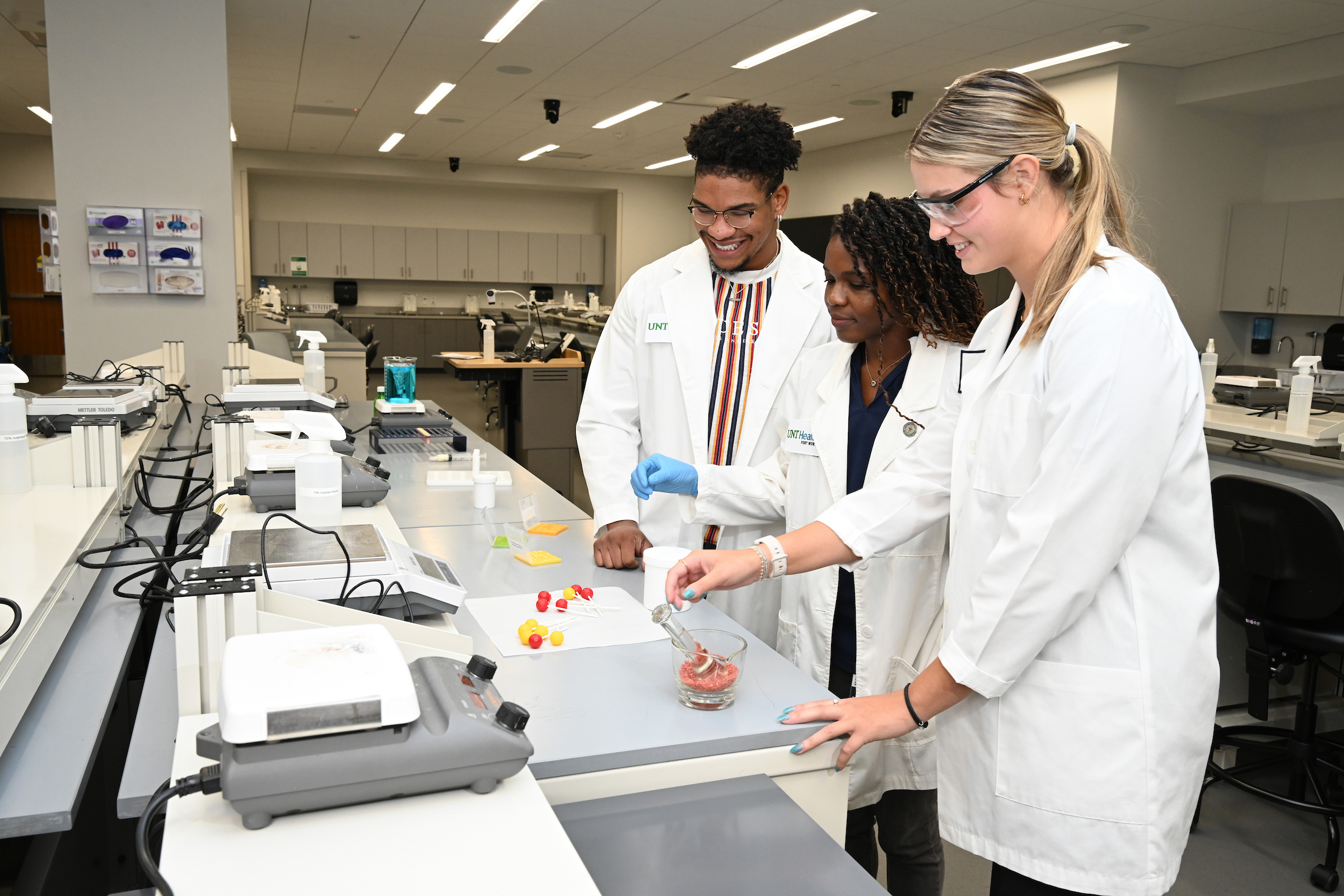
The PhD in Pharmaceutical Sciences program offered by the College of Pharmacy is designed to address the growing job market and workforce in the pharmaceutical sciences by building on the strengths of the College of Pharmacy to provide a multidisciplinary integration of basic research, patient-oriented research, and population research in pharmaceutical sciences. This program provides a path for individuals in the workforce with a master’s level degree in pharmaceutical sciences and related fields to enhance their marketable skills, career advancement, and become innovators in the discovery and development of drug products and therapeutics and health outcomes of therapies and services. Students will complete a dissertation in one of the following emphasis areas: Medicinal Chemistry, Pharmaceutics, Pharmacology & Toxicology, or Applied Outcomes Research. A MS or a PharmD is required for the admission.
Program Details
Minimum 60 SCH
Full Time
On Campus
PhD – Pharmaceutical Sciences
Key Outcomes
- Advanced Research Expertise: Develop specialized knowledge to solve complex problems across Medicinal Chemistry, Pharmaceutics, Pharmacology, and Toxicology.
- Hypothesis-Driven Discovery: Master the ability to formulate, test, and interpret research hypotheses to advance the pharmaceutical sciences.
- Scientific Dissemination: Synthesize and communicate high-level research findings through peer-reviewed publications and professional presentations.
- Leadership & Career Readiness: Cultivate the leadership skills necessary for high-impact roles in the pharmaceutical industry, biotechnology, and government regulatory agencies.
- Professional Advancement: Achieve significant career growth, with 90% of graduates successfully advancing their careers within one year of completion.
- Research Productivity: Contribute to the field through original first-author publications and by securing extramural research funding by your third year.
- Educational Excellence: Gain valuable didactic experience through mentored teaching assistantships, consistently earning high performance evaluations.
Potential Career Paths
- Clinical Pharmacology and Research
- Drug Design and Development
- Formulation Development
- Pharmacoengineering
- Pharmacogenomics
- Regulatory Sciences
- Biopharmaceutics
- Patent Law
- Pharmacoepidemiology
- Pharmaceutical Outcomes
Curriculum
This program requires: 22 SCH of didactic coursework and 38 SCH of experiential coursework
- Total: 90 SCH (including 30 SCH transferred from MS)
Didactic coursework (22 SCH) includes: Ethics and Regulatory Aspects of Research, Scientific Communications in Pharmaceutical Sciences, Journal Club in Pharmaceutical Sciences, Seminar in Pharmaceutical Sciences, Pedagogy of Teaching, Prescribed Emphasis Electives, Advanced Electives.
Experiential coursework (38 SCH) includes: Individual Research (26 SCH), Internship: Innovation and Entrepreneurship I, Doctoral Dissertation (9 SCH).
*The curriculum therefore consists of approximately 42% structured didactic training and 58% experiential research engagement, ensuring substantial academic and scholarly rigor.
College Faculty
 Senior Associate Dean of Research and Program Director
Meet Dr. Cunningham
Rebecca Cunningham, PhD
 Associate Professor
Meet Dr. Dong
Xiaowei Dong, PhD
 Chair and Professor, Pharmaceutical Sciences
Meet Dr. Emmitte
Kyle Emmitte, PhD
 Associate Professor
Meet Dr. Inman
Denise Inman, PhD
 Assistant Professor
Meet Dr. Kastellorizios
Michail Kastellorizios, PhD
 Assistant Professor
Meet Dr. Kim
Jayoung Kim, PhD
Admissions
Admission Criteria
- Application for admission to UNT Health Science Center College of Pharmacy.
- Earned a Master’s degree (30 SCH) in one of the areas of Medicinal Chemistry, Pharmaceutics, Pharmacology & Toxicology, Applied Outcomes Research or closely related field; or Earned a PharmD degree from a U.S. institution or an internationally comparable institution.
- English proficiency - ESL students are preferred to have a minimum TOEFL iBT score of 90 or a minimum IELTS score of 6.5. This requirement will be waived for students who have studied for at least 2 semesters in the US or if English was the language of the instruction for their Master’s or undergraduate degree.
- Applicants who do not meet all of these criteria may provide appropriate justification(s) for being considered on a case-by-case basis.