
UNT Health, UNT faculty earn Interdisciplinary Team Science Award
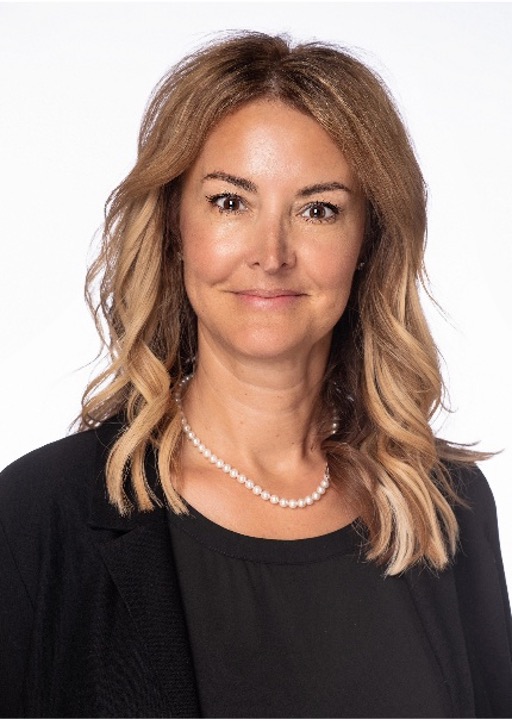
Dr. Kari Northeim
One university. Two campuses. One shared goal. When faculty members combine expertise across disciplines, they can tackle some of their communities' most pressing challenges.
That is exactly what Dr. Kari Northeim, assistant professor in the Department of Public Health at UNT Health Fort Worth, and Dr. Sahara Ali, assistant professor in the Anuradha and Vikas Sinha Department of Data Science at the University of North Texas, set out to do. Their collaboration recently earned a $50,000 exploratory grant through the UNT & UNT Health Interdisciplinary Team Science (ITS) Awards.
Ali initiated the partnership after discussing the intersection of air pollution and population health with Northeim. Together, they developed the project, "Air pollution exposure and environmental health: A community-engaged research approach," which combines environmental health research with community engagement and education.
As co-principal investigators over the next year, Northeim and Ali will partner with Denton Independent School District and work with a STEM-focused school to develop portable air monitoring kits that students can use at home. The project also will engage students' families, helping them better understand how air quality affects their health.
“When children receive health education early in life, they are more likely to develop the knowledge and skills that support informed health decisions as they grow older,” Northeim said.
The UNT & UNT Health Interdisciplinary Team Science (ITS) Awards support collaborative research initiatives that unite investigators from both campuses to address critical scientific challenges from diverse perspectives. Jointly sponsored by the divisions of research and innovation at UNT and UNT Health, the program provides seed funding to strengthen research partnerships, generate preliminary data and position teams for competitive external funding opportunities.
As they began exploring the project, Northeim and Ali examined existing regulatory air quality monitors maintained by the U.S. Environmental Protection Agency. North Texas has between 17-18 monitors, limiting the availability of localized air quality data. While the City of Denton has established its own monitoring network and public dashboard, Northeim said that information has not yet been leveraged to inform public health efforts.
"Research has strengthened our understanding of the relationship between air pollution and asthma, and public awareness of those health impacts has increased substantially," Northeim said. "Many low-income communities experience greater exposure to air pollution because of historical patterns of land use, transportation infrastructure, and industrial development. Current air quality alerts are generally regional, but more localized monitoring could help schools and families better understand conditions in their immediate area."
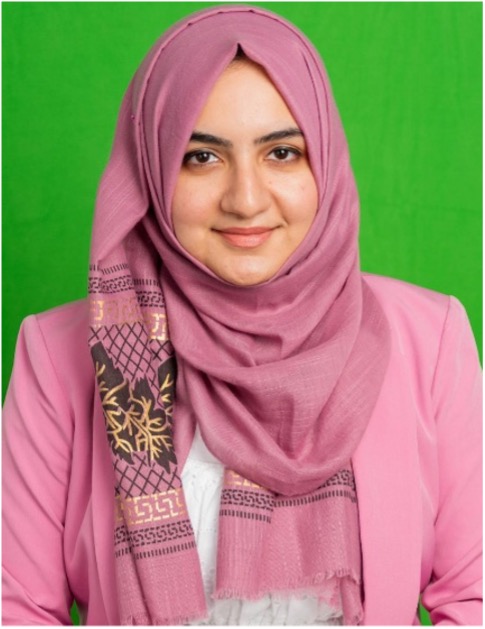
Dr. Sahara Ali
Using regulatory data from large-scale monitors and advanced spatiotemporal techniques, the research team will identify high-risk areas throughout Denton. Ali leads the project's data science efforts, developing machine learning and spatiotemporal modeling approaches for time-series forecasting and high-resolution spatial prediction of air pollutants across North Texas.
The team's primary focus is children with asthma and others with pre-existing health conditions in Denton. Ali said the modeling approaches will identify localized pollution patterns and provide scientifically grounded information to support public health research and community decision-making. The project also marks her first funded collaboration in environmental health research.
“I am excited to work alongside Dr. Northeim and contribute data science methods to address an important community challenge,” Ali said. “One aspect I am particularly looking forward to is involving both high school and undergraduate students in the research process.”
The exploratory award will help establish the foundation for a larger federally funded project by generating preliminary data for a future National Institutes of Health grant proposal. Northeim also plans to support students from the UNT Graduate School, UNT Health and the Texas Academy of Mathematics and Science as they work alongside faculty on real-world environmental challenges and engage with community partners.
Ultimately, the team plans to develop high-resolution air quality maps that reveal neighborhood-scale pollution patterns often missed by traditional monitoring networks.
"The impact I am most excited about is empowering the local community with actionable information about the air they breathe," Ali said. "Through our partnership with the City of Denton and Denton ISD, we hope to increase awareness among students, parents and teachers about ambient air quality, its influence on human health, and practical steps that individuals and communities can take to reduce exposure and improve environmental well-being."